

Work
Evidence that clarity creates progress.
Across industries, technologies change. The challenges often do not.
We help leadership teams understand complexity, align priorities, and move forward with confidence.
How we work
What this work proves.
The industries, technologies, and environments vary. The underlying challenges rarely do: unclear priorities, fragmented systems, competing objectives, and operational friction. The purpose is not deliverables. It is clarity, better decisions, and meaningful progress.
- 01
Understand
Identify what is actually creating friction.
- 02
Clarify
Reduce ambiguity and build a shared understanding.
- 03
Prioritize
Decide where effort and investment should go.
- 04
Move Forward
Create the conditions for alignment and measurable progress.
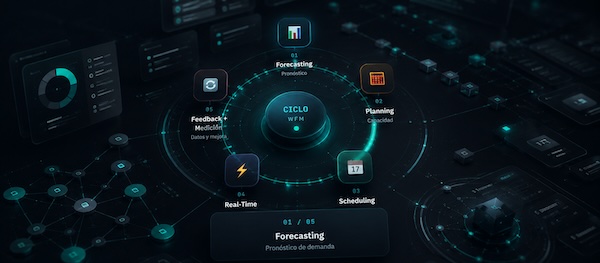
B2B · Workforce Management Consulting
WFM Consulting & Operational Intelligence Platform
A workforce management consulting firm needed to turn deep operational expertise into a digital platform decision makers could explore and act on, without losing analytical rigor.
What was complex
- WFM concepts like Erlang-C, shrinkage, and capacity planning resist simplification.
- The platform had to reach decision makers without that expertise, without becoming generic.
- Diagnostics had to feel rigorous enough to build credibility, yet usable enough to start conversations.
What we helped clarify
- How to translate specialized knowledge into a navigable, credible offer
- Which concepts needed explanation versus live demonstration
- Where simulation served the methodology versus added complexity
Methodology, positioning, and simulation tools converged into one coherent platform, extending the practice beyond referrals and grounding commercial conversations in the client's own data.
Vertical SaaS · Restaurant Operations
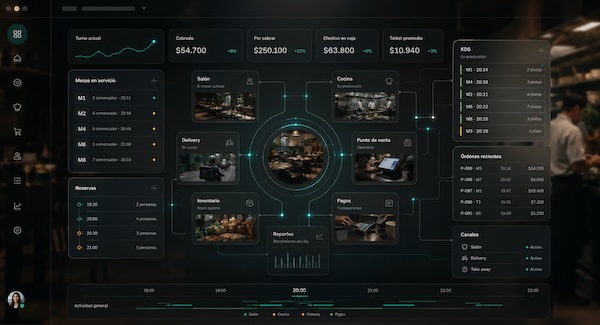
Restaurant Operations Management Platform
One platform had to coordinate dining room, kitchen, POS, reservations, delivery, and reporting for teams with fundamentally different roles, all during live service.
What was complex
- Owners, managers, waitstaff, kitchen, bar, and cashiers each needed different information, often at once.
- Coordinating service state across channels risked overloading every role.
- Each role needed clarity without noise from the others.
What we helped clarify
- How shared state and role priorities could coexist without noise
- Which moments needed active visibility versus ambient awareness
- What owners, managers, and staff each needed in real time versus across shifts
Information once scattered across tools, conversations, and manual tracking became one role-oriented experience, giving managers in-moment visibility instead of after-the-fact review.
AI SaaS · Legal Decision Workflows
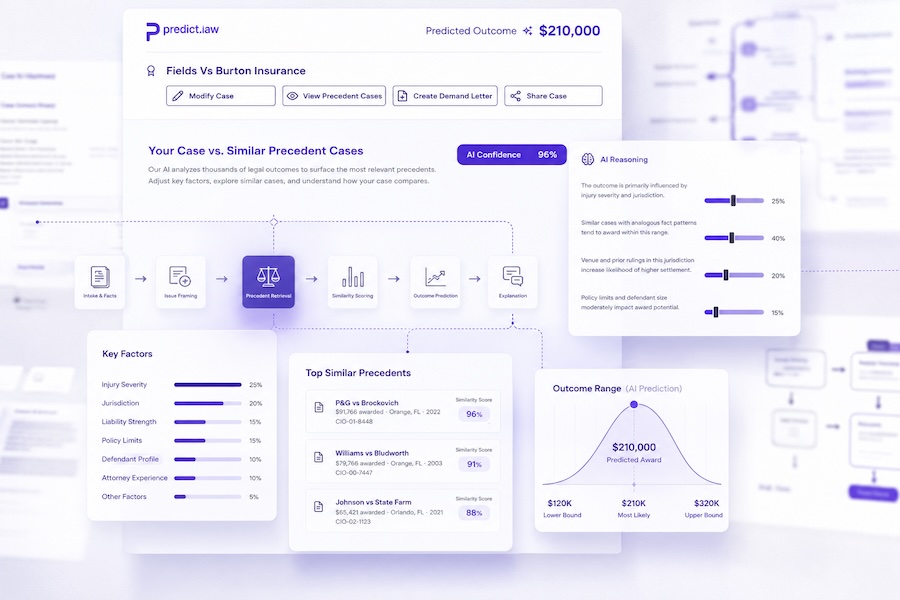
AI-Powered Legal Intelligence Platform
An AI product had to translate legal, machine-learning, and decision logic into workflows users could understand, compare, configure, and trust.
What was complex
- Users faced dense information, unfamiliar AI behavior, and high-stakes choices.
- Legal precision, model behavior, and usability pulled in different directions.
- No clear view of which friction points were eroding confidence.
What we helped clarify
- How users actually reason through high-stakes, AI-assisted decisions
- Where the product needed to explain itself, and where explanation became noise
- Which moments mattered most for trust: onboarding, comparison, configuration
Legal, ML, and UX converged on a single decision model. The roadmap moved from an unresolved backlog to a trust-indexed priority sequence.
Human-AI Platform · Coaching Operations
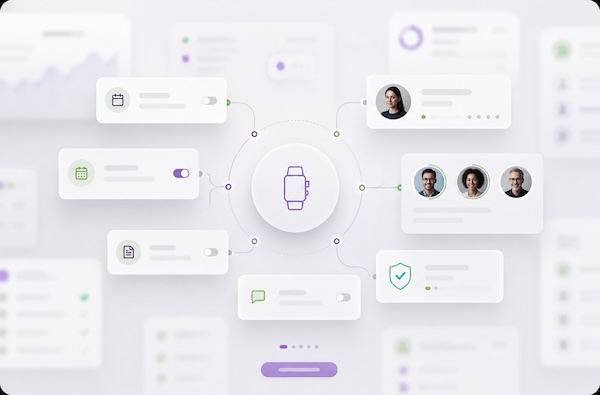
Human-AI Performance Coaching Platform
An early-stage platform combined AI support, human coaching, behavior change, and Trust & Safety constraints. It needed structure before it could scale with confidence.
What was complex
- AI support, human coaching, and safety constraints all shaped one experience.
- AI had to help without users feeling unsupported or unsafe.
- Users needed to know when human guidance entered the picture.
What we helped clarify
- When AI should act, when humans should, and how users would tell
- The interaction rules and guardrails the experience had to respect
- Which parts of the journey carried the most risk for trust and safety
The team set a stable interaction model on the first pass, ending per-sprint renegotiation. Trust & Safety constraints became explicit and defensible.
Enterprise SaaS · Clinical Operations
Enterprise Clinical Operations Platform
A fragmented enterprise ecosystem supported clinical-trial workflows across many modules, teams, and stakeholders. The challenge was not one screen, it was system-level clarity.
What was complex
- Data-heavy tasks and inconsistent patterns had accumulated across modules.
- Product teams managed competing requirements with no shared picture.
- No single team owned how work actually flowed through the system.
What we helped clarify
- How work moved across modules, teams, and clinical workflows
- Which inconsistencies created real cost versus cosmetic ones
- Shared interaction and accessibility standards teams could align on
Four modules once managed in isolation were mapped as one connected workflow. Product, design, and engineering aligned on a shared accessibility baseline and a joint priority view.
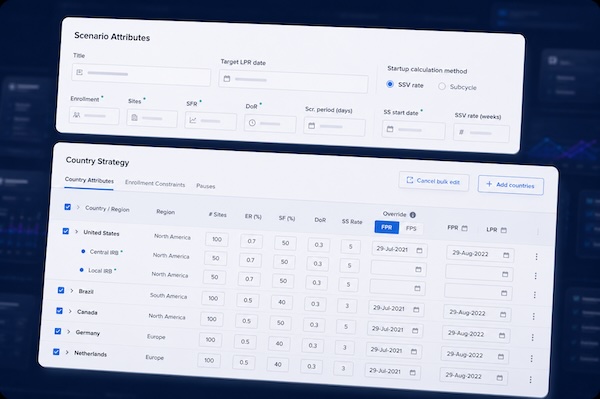
B2B SaaS · Franchise Operations
Multi-Country Franchise Management Platform
A multi-tenant platform had to support franchise operations across countries while aligning corporate priorities, franchisee needs, delivery, data, and enterprise support.
What was complex
- Regional expansion multiplied competing requirements.
- Corporate priorities, franchisee needs, and support pressure pulled in different directions.
- There was no shared way to decide what mattered first.
What we helped clarify
- Which requirements were structural versus regional exceptions
- An outcome-based roadmap stakeholders could align behind
- How discovery, delivery, support, and data should connect
Competing requirements became one outcome-based roadmap everyone read the same way, turning recurring negotiation into explicit, documented trade-offs.
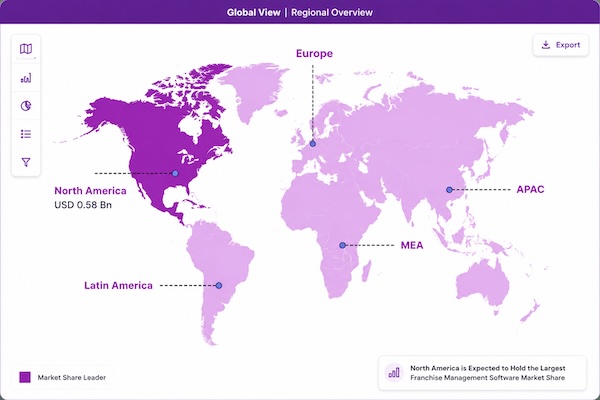
AI Adoption · Operational Change
AI-Driven Business Transformation Program
A growing organization needed to modernize how teams worked, communicated, produced, reported, and adopted AI, without interrupting daily operations.
What was complex
- The change touched production, comms, career paths, tools, BI, and training at once.
- Everything was connected; changing it all at once risked daily operations.
What we helped clarify
- Where AI could improve production without disrupting the work
- The order in which processes, tools, and training should change
- What leadership needed to see to steer adoption
The organization gained a clearer system for sustained change, and the confidence to keep adapting it.
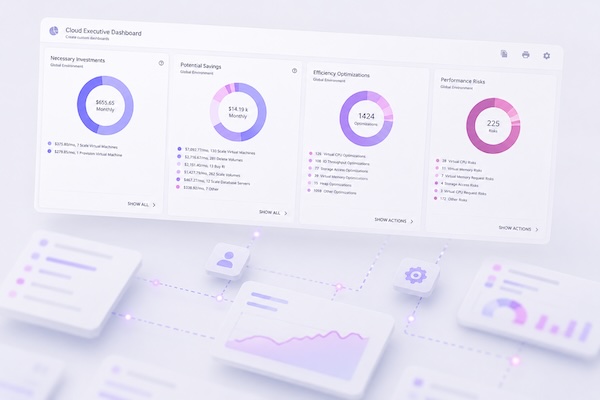
Strategy & Definition · Real Estate Investment
Real Estate Investment Platform Strategy
A real estate investment initiative needed product definition, prioritization, and planning before implementation could responsibly begin. The opportunity was clear; the path was not.
What was complex
- Vision, priorities, ownership, journeys, and requirements were still evolving.
- Moving straight to development would have increased ambiguity, risk, and rework.
What we helped clarify
- Product vision and platform definition
- User journeys and information architecture
- Roadmap, prioritization, and development handoff
Scattered assumptions became one shared reference, and stakeholders entered development aligned behind the same foundation.

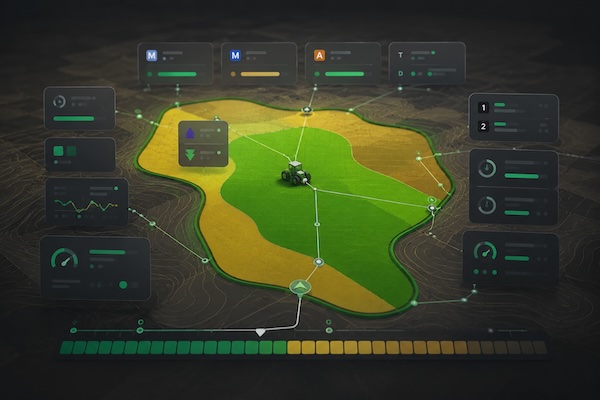
IoT · Agriculture Field Operations
Precision Agriculture & Field Operations Platform
An IoT vehicle platform for precision agriculture had to move a large existing user base into a redesigned paid experience while keeping field usability, reliability, and operator trust intact.
What was complex
- Operators ran heavy machinery outdoors, where interface decisions carried real consequences.
- The business had to migrate users to a paid experience without losing trust.
What we helped clarify
- What operators, stakeholders, and engineers each needed protected
- Which field usability constraints were non-negotiable
- How three connected products should work as one experience
Field map, in-cab controls, and machine telemetry unified under one interaction language. The paid version launched with strong operator adoption and a documented, defensible design rationale.
Start here
Have a challenge that does not fit neatly into one category?
Complexity rarely respects organizational boundaries. Sometimes the first step is simply understanding where friction exists and what deserves attention.